Harvard Business Review
HBR Guide
Classés par année de parution
Index alphabétique :
- Beating burnout - 2021
- Being a great boss - 2021
- Buying a small business- 2017
- Changing your career - 2018
- Coaching employees - 2015
- Collaborative teams - 2021
- Crafting your purpose - 2022
- Critical thinking - 2023
- Emotionnal intelligence - 2017
- Leading Teams - 2015
- Leading through change - 2024
- Making Every Meeting Matter - 2016
- Managing flexible work - 2022
- Managing stress at work - 2014
- Motivating people - 2019
- Navigating the toxic work place - 2024
- Negociating - 2016
- Performance management - 2017
- Persuasive presentations - 2012
- Project management - 2012
- Remote work - 2021
- Your job search - 2024
HBR Guide ...-2020
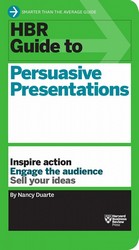 |
Persuasive prentations - 2012 Take the pain out of the presentations. Terrified of speaking in front of a group? Or simply looking to polish your skills? No matter where you are on the spectrum, this guide will give you the confidence and the tools you need to get results. |
||
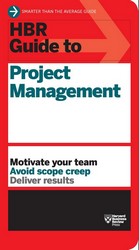 |
Project management - 2012 How do you rein in the scope of your project when you’ve got a group of demanding stakeholders breathing down your neck? And map out a schedule everyone can stick to? And motivate team members who have competing demands on their time and attention? |
||
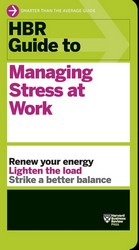 |
Managing stress at work - 2014 Are you suffering from work-related stress? Feeling overwhelmed, exhausted, and short-tempered at work--and at home? Then you may have too much stress in your life. Stress is a serious problem that impacts not only your mental and physical health, but also your loved ones and your organization. So what can you do to address it? The "HBR Guide to Managing Stress at Work" will help you find a sustainable solution. It will help you reach the goal of getting on an even keel--and staying there. You'll learn how to: (1) Harness stress so it spurs, not hinders, productivity, (2) Create realistic and manageable routines, (3) Aim for progress, not perfection, (4) Make the case for a flexible schedule, (5) Ease the physical tension of spending too much time at your computer, and (6) Renew yourself physically, mentally, and emotionally. |
||
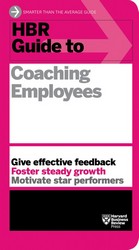 |
Coaching employees - 2015 Help your employees help themselves. As a manager in today’s business world, you can’t just tell your direct reports what to You need to help them make their own decisions, enable them to solve tough problems, and actively develop their skills on the job. Whether you have a star on your team who’s eager to advance, an underperformer who’s dragging the group down, or a steady contributor who feels bored and neglected, you need to coach Help shape their goals—and support their efforts to achieve them. |
||
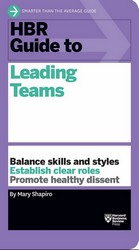 |
Leading teams - 2015 Great teams don’t just happen. How often have you sat in team meetings complaining to yourself, “Why does it take forever for this group to make a simple decision? What are we even trying to achieve?” As a team leader, you have the power to improve things. It’s up to you to get people to work well together and produce results. Written by team expert Mary Shapiro, the HBR Guide to Leading Teams will help you avoid the pitfalls you’ve experienced in the past by focusing on the often-neglected people side of teams. With practical exercises, guidelines for structured team conversations, and step-by-step advice, this guide will help. |
||
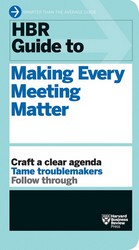 |
HBR Guide to Making Every Meeting Matter - 2016 Make every minute count. Your calendar is full, and yet your meetings don’t always seem to advance your work. Problems often arise with unrealistic or vague agendas, off-track conversations, tuned-out participants who don’t know why they’re there, and follow-up notes that no one reads―or acts on. Meetings can feel like a waste of time. But when you invest a little energy in preparing yourself and your participants, you’ll stay focused, solve problems, gain consensus, and leave each meeting ready to take action. With input from over 20 experts combined with useful checklists, sample agendas, and follow-up memos, the HBR Guide to Making Every Meeting Matter will teach you how. |
||
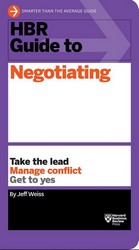 |
Negociating - 2016 Forget about the hard bargain. Whether you’re discussing the terms of a high-stakes deal, forming a key partnership, asking for a raise, or planning a family event, negotiating can be stressful. One person makes a demand, the other concedes a point. In the end, you settle on a subpar solution in the middle―if you come to any agreement at all. But these discussions don’t need to be win-or-lose situations. Written by negotiation expert Jeff Weiss, the HBR Guide to Negotiating provides a disciplined approach to finding a solution that works for everyone involved. Using a seven-part framework, this book delivers tips and advice to move you from a game of concessions and compromises to one of collaboration and creativity, resulting in better outcomes and better working relationships. |
||
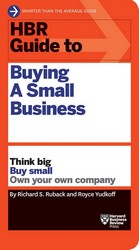 |
Buying a small business - 2017 Think big, buy small. Are you looking for an alternative to a career path at a big firm? Does founding your own start-up seem too risky? There is a radical third path open to You can buy a small business and run it as CEO. Purchasing a small company offers significant financial rewards―as well as personal and professional fulfillment. Leading a firm means you can be your own boss, put your executive skills to work, fashion a company environment that meets your own needs, and profit directly from your success. But finding the right business to buy and closing the deal isn't always easy. From Harvard Business School professors Richard Ruback and Royce Yudkoff |
||
 |
Emotionnal intelligence - 2017 Managing the human side of work. Research by Daniel Goleman, a psychologist and coauthor of "Primal Leadership," has shown that emotional intelligence is a more powerful determinant of good leadership than technical competence, IQ, or vision. Influencing those around us and supporting our own well-being requires us to be self-aware, know when and how to regulate our emotional reactions, and understand the emotional responses of those around us. No wonder emotional intelligence has become one of the crucial criteria in hiring and promotion. But luckily it's not just an innate trait: Emotional intelligence is composed of skills that all of us can learn and improve on. In this guide, you'll learn how to: Determine your emotional intelligence strengths and weaknesses; Understand and manage your emotional reactions; Deal with difficult people; Make smarter decisions; Bounce back from tough times; Help your team develop emotional intelligence. |
||
 |
Performance management - 2017 Are your employees meeting their goals? Is their work improving over time? Understanding where your employees are succeeding--and falling short--is a pivotal part of ensuring you have the right talent to meet organizational objectives. In order to work with your people and effectively monitor their progress, you need a system in place. The "HBR Guide to Performance Management" provides a new multi-step, cyclical process to help you keep track of your employees' work, identify where they need to improve, and ensure they're growing with the organization. You'll learn to: Set clear employee goals that align with company objectives; Monitor progress and check in regularly; Close performance gaps; Understand when to use performance analytics; Create opportunities for growth, tailored to the individual; Overcome and avoid burnout on your team. |
||
 |
Changing your career - 2018 Your next act starts now. You're ready for something new, but it's hard to start over. Just the idea of trading the security you have now for the unknown or throwing away the education and time you've invested in your current career can plunge you into a swirl of indecision and anxiety. But mixing things up every few years is an increasingly normal and cyclical part of a healthy work life--a way to gain new skills and stretch your existing ones by applying them to different contexts. |
||
 |
Motivating people - 2019 Help your people reach their potential. As a manager, it's your responsibility to ensure your team is motivated and performing at a high level. But recent data reveals abysmal engagement levels among workers around the globe. How do you fix the problem--before your most talented people walk out the door? By understanding what drains your employees, you can increase their job satisfaction and push them toward achieving their goals. The HBR Guide to Motivating People provides practical tips and advice to help your team find meaning in their work, build on their strengths, and produce the best results for the organization.
|
||
HBR Guide 2021 - ...
 |
Being a great boss - 2021 Are you a good boss—or a great one? |
||
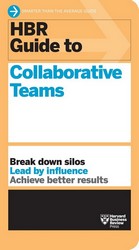 |
Collaborative Teams - 2021 Break down the barriers to effective collaboration. To get work done and accomplish your goals, you need access to resources and ideas from across your organization. But technology issues, office politics, and lack of clear authority can get in the way of success. The HBR Guide to Collaborative Teams provides practical tips and advice to help you collaborate more effectively. Whether you're working with your own direct reports or looking to find resources outside your department, you'll discover how to align the ideas and objectives of others in ways that allow you to work together and solve problems more easily. You'll learn to: Bust departmental silos Develop a shared purpose Forge relationships across the company Overcome turf wars and conflict Prevent collaborative overload and fatigue Use the right tools for virtual information sharing and teamwork |
||
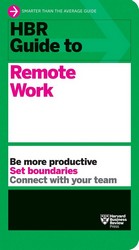 |
Remote work - 2021 Get your best work done, no matter where you do it. Video calls from your couch. Project reports in a coffee shop. Presentations at your kitchen table. Working remotely gives you more flexibility in how and where you do your job. But being part of a far-flung team can be challenging. How can you make remote work work for you? The HBR Guide to Remote Work provides practical tips and advice to help you stay productive, avoid distractions, and collaborate with your team, despite the distance that separates you. You'll learn |
||
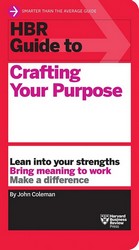 |
Crafting your purpose - 2022 Stop searching for purpose. Build it. |
||
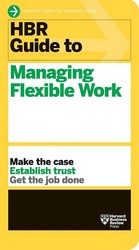 |
Managing flexible work - 2022 The nine-to-five office routine no longer exists. Many employees have the option to work anywhere, any time. But how do you find the flexible arrangement that's right for you? And how do you manage a team when they're all working in different places and on different schedules? The HBR Guide to Managing Flexible Work has the answers. Filled with tips, advice, and examples, this book helps individual contributors and managers alike assess the trade-offs that come with flexible work options, advocate for the arrangement that works for them, and remain productive and connected to team members at the same time. You'll learn to: ● Identify key job responsibilities and when and where each one can be done ● Establish the best arrangements for yourself and your team ● Create the conditions for success ● Stay connected and visible, no matter when or where you work |
||
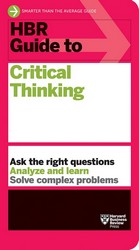 |
Critical thinking - 2023 Tackle complex situations with critical thinking. |
||
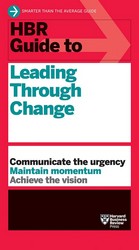 |
Leading through change - 2024 Drive transformation. |
||
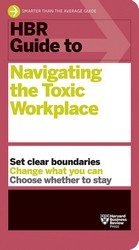 |
Navigating the toxic workplace - 2024 Is your workplace toxic? |
||
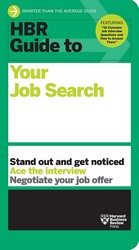 |
Your job search - 2024 Land the job of your dreams. |
||